
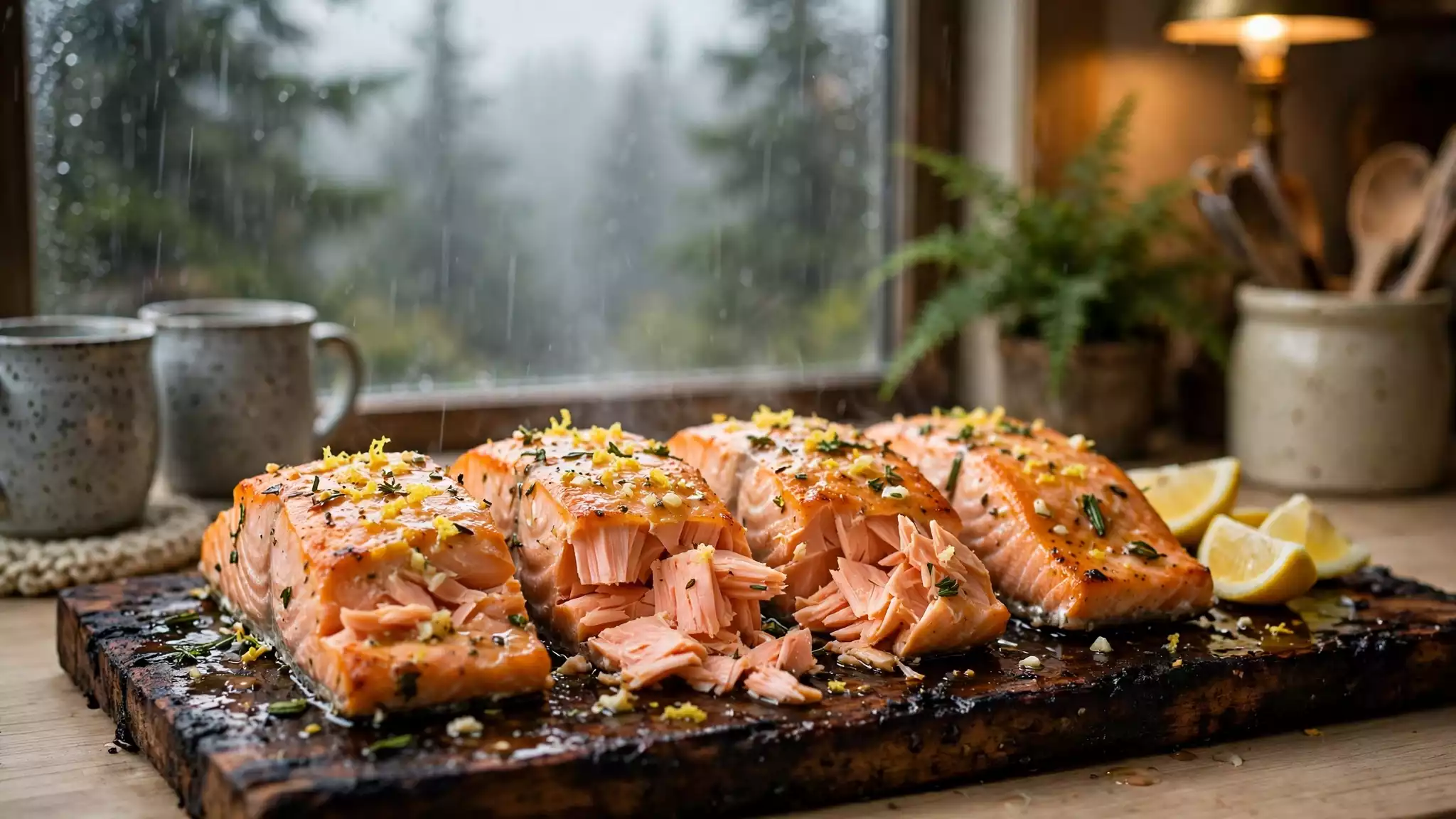
Cedar plank salmon is one of the great Pacific Northwest traditions, born from the way Indigenous peoples of the coast cooked salmon on cedar boards beside an open fire. The wood plank protects the fish from direct heat, so it roasts gently in a cloud of aromatic smoke and comes out incredibly moist, with a delicate woodsy flavor you cannot get from a skillet.
This version keeps it bright and simple: thick skinless fillets marinated in olive oil, lemon zest, garlic, fresh rosemary and thyme. There is no sugar in the rub, so it stays naturally low carb while the herbs and citrus perfume every flake. The inside turns tender, juicy and coral pink, the edges lightly golden.
Serve it for a relaxed weekend dinner, a backyard cookout or an easy meal for guests, with grilled asparagus, a crisp green salad or roasted zucchini on the side.
Time
- Prep time : 15 min
- Cook time : 15 min
- Servings : 4
Ingredients
- Cedar plank(s) (for grilling)
- ¼ cup olive oil
- ½ teaspoon salt
- ½ teaspoon freshly ground black pepper
- 2 teaspoons lemon zest, (from 2 lemons)
- 1½ teaspoons finely chopped fresh rosemary
- 1½ teaspoons finely chopped fresh thyme
- 2 cloves garlic, (minced)
- 4 (6-oz) salmon fillets, skin removed
- Lemon wedges, (for serving)
Instructions
- Fill a large bowl or the sink with water and submerge the cedar plank completely, weighing it down with a heavy mug if it floats. Soak it for at least 1 hour; a well-soaked plank feels heavy and darker in color, and it will smolder instead of catching fire.
- In a baking dish large enough to hold the fish in one layer, stir together the 1/4 cup olive oil, 1/2 teaspoon salt, 1/2 teaspoon black pepper, 2 teaspoons lemon zest, 1 1/2 teaspoons rosemary, 1 1/2 teaspoons thyme and the minced garlic. The marinade should smell strongly of lemon and herbs.
- Add the four salmon fillets and turn them several times so every side is coated with the herby oil. Cover and refrigerate for at least 30 minutes, or up to 4 hours ahead of time.
- Preheat the grill to medium-high heat, between 400°F and 450°F. The grill is ready when the thermometer holds steady in that range with the lid closed.
- Take the plank out of the water and pat it dry. Lay the salmon fillets on top with a little space between them, spooning any marinade left in the dish over the tops.
- Set the plank on the grill grates, close the lid and cook for 10 to 15 minutes, until the salmon is done to your liking. It is ready when the center turns from translucent to opaque coral pink and the flesh flakes easily when pressed with a fork; the plank edges will char and smoke.
- Keep a spray bottle of water nearby while the salmon cooks. If the edges of the plank catch a flame, mist or douse them lightly and close the lid again.
- Carefully remove the hot plank with tongs or a wide spatula and set it on a heatproof board. Serve the salmon right off the plank with lemon wedges for squeezing over the top.
Tips
- Choose fillets of the same thickness, about 1 to 1 1/2 inches, so they all finish cooking at the same time. Thin tail pieces dry out before thick center cuts are ready.
- An instant-read thermometer takes the guesswork out: pull the salmon at 125°F to 130°F in the thickest part for moist, medium fillets, as the heat keeps rising for a minute or two off the grill.
- No grill on a rainy day? Bake the soaked plank with the salmon in a 400°F oven on a rimmed baking sheet for 12 to 18 minutes; you get the moist texture and a gentler cedar aroma.
- Swap the rosemary and thyme for fresh dill and parsley, or brush the fillets with a little Dijon mustard before cooking for a tangy crust that stays sugar free.
- Leftover salmon keeps for 2 days in the fridge. Flake it cold over a green salad with avocado and cucumber, or fold it into scrambled eggs for a low carb breakfast.