
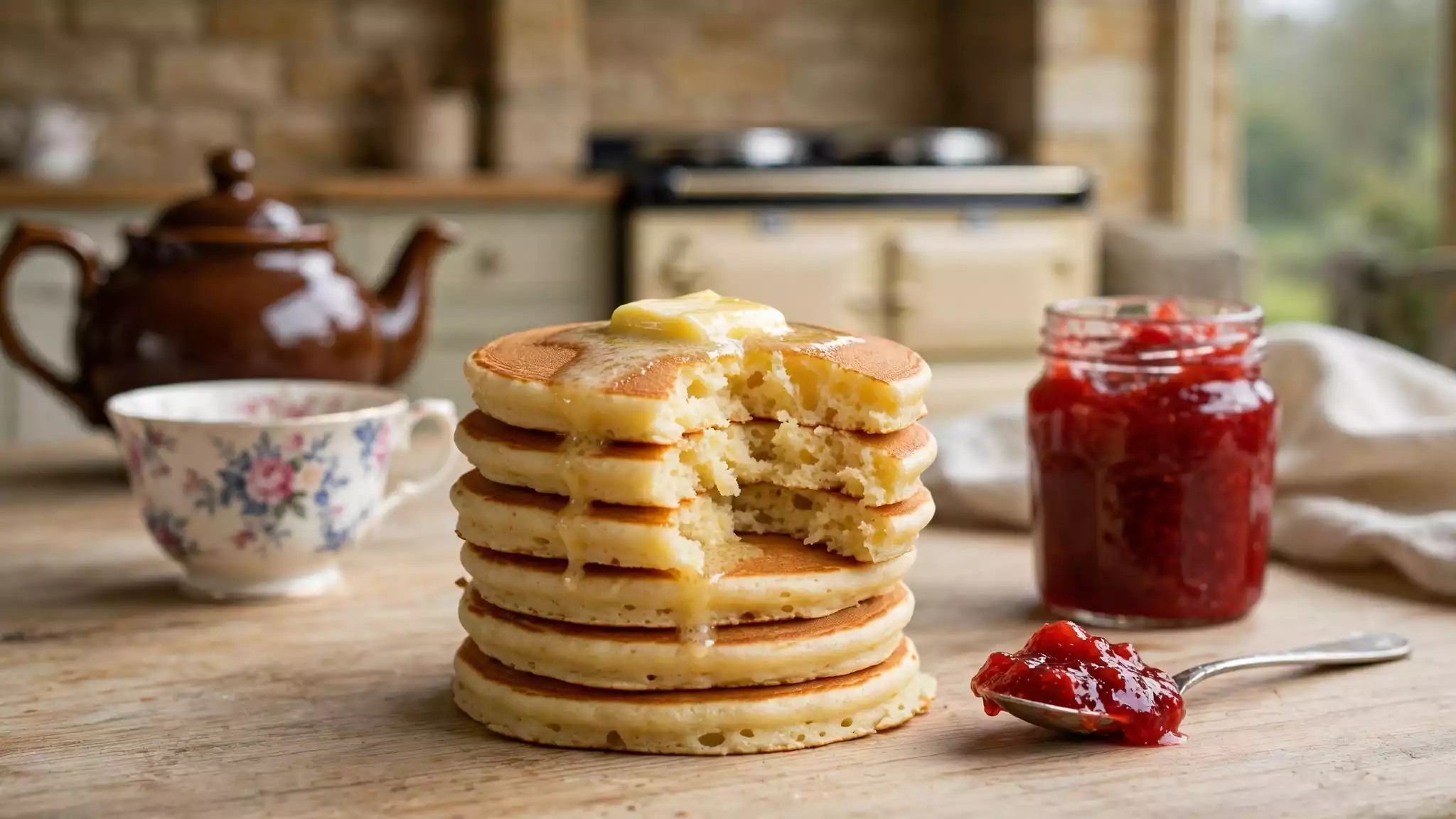
Scotch pancakes, also called drop scones, are small, thick and fluffy pancakes cooked in little rounds on a griddle or frying pan. This easy Scotch pancakes recipe makes about 16 of them, each one golden on the outside, soft and airy inside, and just sweet enough to be lovely on their own or loaded with butter and jam.
They come from Scotland, where they were traditionally cooked on a flat iron girdle over the fire, which is why the batter is "dropped" from a spoon rather than poured. Much thicker than the thin crêpe-style pancakes of Pancake Day, they are closer to an American pancake but smaller and more tender, and they have been a fixture of British tea tables for generations.
They take about 30 minutes from start to finish, so they are perfect for a lazy weekend breakfast, an afternoon tea in the garden or a quick treat when the children come home from school.
Time
- Prep time : 10 min
- Cook time : 20 min
- Servings : 16
Ingredients
- 300g self-raising flour
- 1½ tsp baking powder
- 50g caster sugar
- 2 eggs, beaten
- 300-325ml whole milk
- groundnut oil, for frying
- butter, to serve
Instructions
- Put the 300g self-raising flour, 1½ tsp baking powder and 50g caster sugar in a large bowl and stir them together with a whisk. This spreads the raising agent evenly, so every pancake rises in the same way, and breaks up any small lumps of flour.
- Make a well in the centre and add the 2 beaten eggs with about half of the milk. Whisk from the middle outwards, drawing in the flour little by little, until you have a thick, smooth paste with no lumps.
- Gradually whisk in the rest of the milk, up to 325ml in total, until the batter is thick and smooth and holds its shape when spooned. It should drop slowly from the spoon in a heavy blob rather than run; if it is too stiff, add a splash more milk.
- Heat a large non-stick frying pan or flat griddle over a medium-hot heat and brush it very lightly with groundnut oil, wiping off any excess with kitchen paper. To test the heat, drop in a tiny bit of batter: it should sizzle gently and set within a few seconds.
- Cook 3 or 4 pancakes at a time, spooning the batter into small rounds about 8cm wide and leaving plenty of space between them. Do not spread the batter; it will settle into neat, thick circles by itself.
- Leave them alone for 1 to 2 minutes, until small bubbles appear and pop all over the surface and the edges look matt and set. That is the sign the underside is golden and they are ready to turn.
- Flip each pancake with a thin spatula and cook for another minute or so, until the second side is golden and the pancakes have puffed up and feel springy when pressed lightly in the middle.
- Transfer to a plate and cover with a clean tea towel to keep them warm and soft while you cook the rest, brushing the pan with a little more oil between batches. Serve warm, spread with plenty of butter.
Tips
- Keep the heat at medium-hot: too hot and the outside burns before the middle is cooked, too low and the pancakes turn pale and tough. The first batch is often a test, so adjust the heat after it.
- Do not overmix once the milk is in; a few minutes of gentle whisking is enough. Overbeating knocks out air and makes the drop scones flat and chewy.
- For a fruity version, scatter a few blueberries or a handful of sultanas over each round of batter just after spooning it into the pan.
- Wrapped in a tea towel, the pancakes stay soft for several hours. Cooled pancakes freeze well layered with baking paper; reheat them in a toaster or a dry pan for a minute.
- Serve them with butter and strawberry jam, golden syrup, honey, or lemon and sugar for a classic British treat.